What is TMS
Transcranial Magnetic Stimulation (TMS)
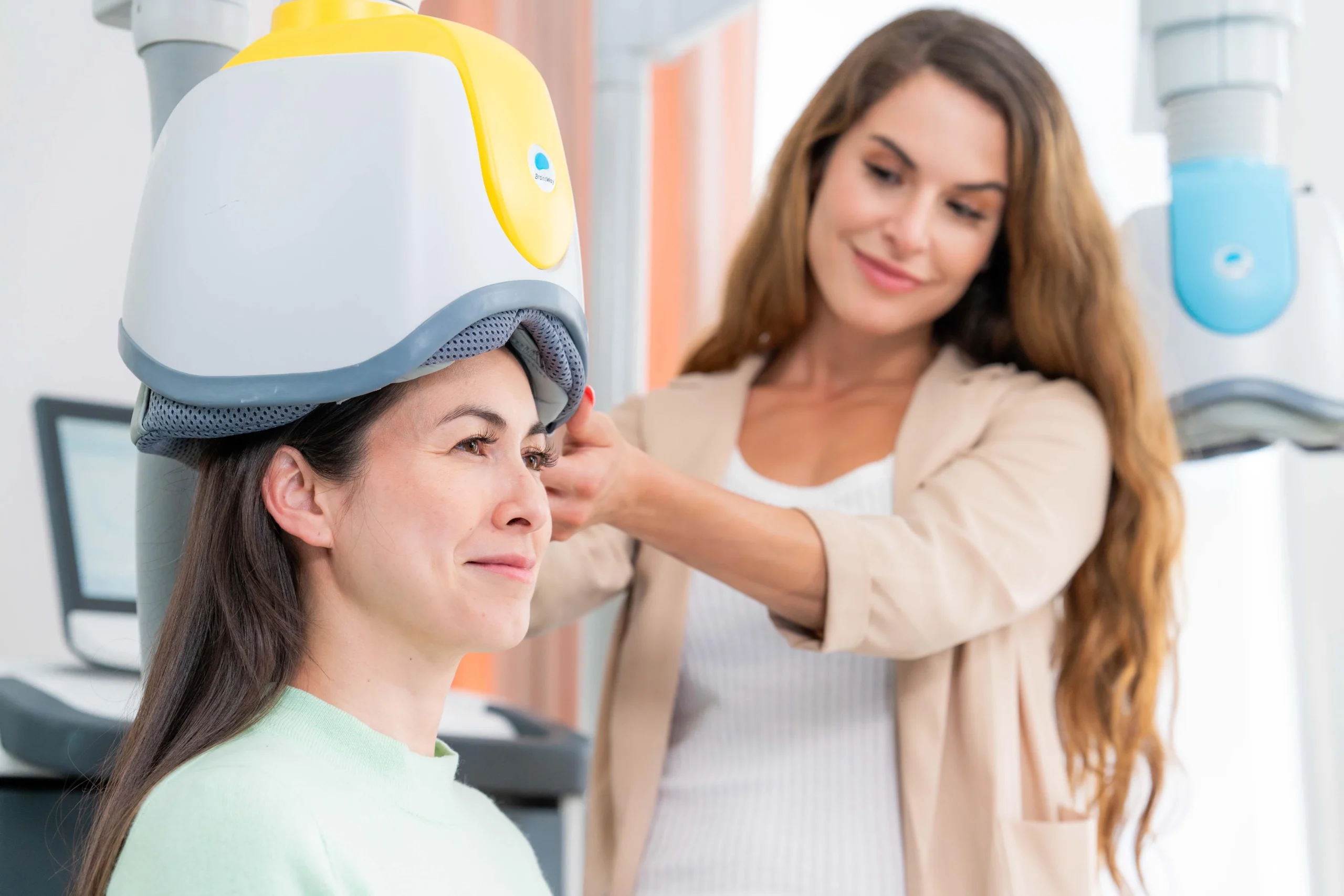
Transcranial Magnetic Stimulation (TMS) is a non-invasive treatment that uses magnetic pulses to stimulate specific brain networks. It is performed in-office while you are awake, and it does not require anesthesia or sedation.
Why Stimulating the Brain Can Help
Many mental health symptoms are linked to patterns of underactivity or dysregulation in specific brain circuits. TMS delivers repeated stimulation to help those networks function more normally over time.
Deep TMS vs Standard TMS
Some TMS systems use a smaller coil design that primarily targets more surface-level regions. Deep TMS uses a different coil architecture designed to stimulate deeper and broader networks. This can matter for people who need broader circuit engagement or have not responded adequately to other treatments.
Who May Consider TMS
Symptoms persist despite trying antidepressants or therapy
Side effects from medication are hard to tolerate
You want a non-drug approach that targets specific brain networks
You want an outpatient option with minimal disruption to daily life
TMS vs Other Treatments
TMS works differently than most common treatments because it targets specific brain networks using magnetic stimulation, without medication or anesthesia. TMS does not require hospital stay.
Compared to antidepressants: TMS is not systemic, so it avoids many whole-body side effects and is delivered as a defined course of in-office sessions rather than a daily drug routine.
Compared to ketamine: TMS is non-drug and does not involve dissociation. It is designed to create steady, durable change by strengthening mood-regulation networks over time.
Compared to electroconvulsive therapy (ECT): TMS does not require anesthesia and does not induce a seizure, and most patients return to normal activities immediately after each session.
Safety Overview
TMS is widely used and generally well-tolerated. The most common side effects are temporary, such as mild headache or scalp discomfort. Safety screening is essential, especially for patients with metal in or around the head, which can make treatment inappropriate.
See If TMS Is Right For You
Get A Clear Answer In One Consultation.
We will review your symptoms, treatment history, and safety factors, then explain whether TMS fits your needs and which FDA-cleared option may apply.