
What Is TMS & How Does It Work
Transcranial Magnetic Stimulation (TMS) is a noninvasive treatment that uses magnetic pulses to stimulate the brain networks involved in mood and behavior. You stay awake the entire time. There is no anesthesia, no sedation, and no hospital stay. During a session, you sit comfortably while the BrainsWay helmet is positioned, and many patients describe the sensation as a repetitive tapping or knocking on the scalp.
Before treatment begins, your provider completes a brief calibration step (often called motor threshold mapping) to set the right location and intensity for you, with periodic recalibration as needed during your course. Protocol details vary by condition, but the overall structure is designed to be practical and outpatient-friendly.
New to TMS? Start with what TMS is and who it may help, or walk through how TMS treatment works, step by step.
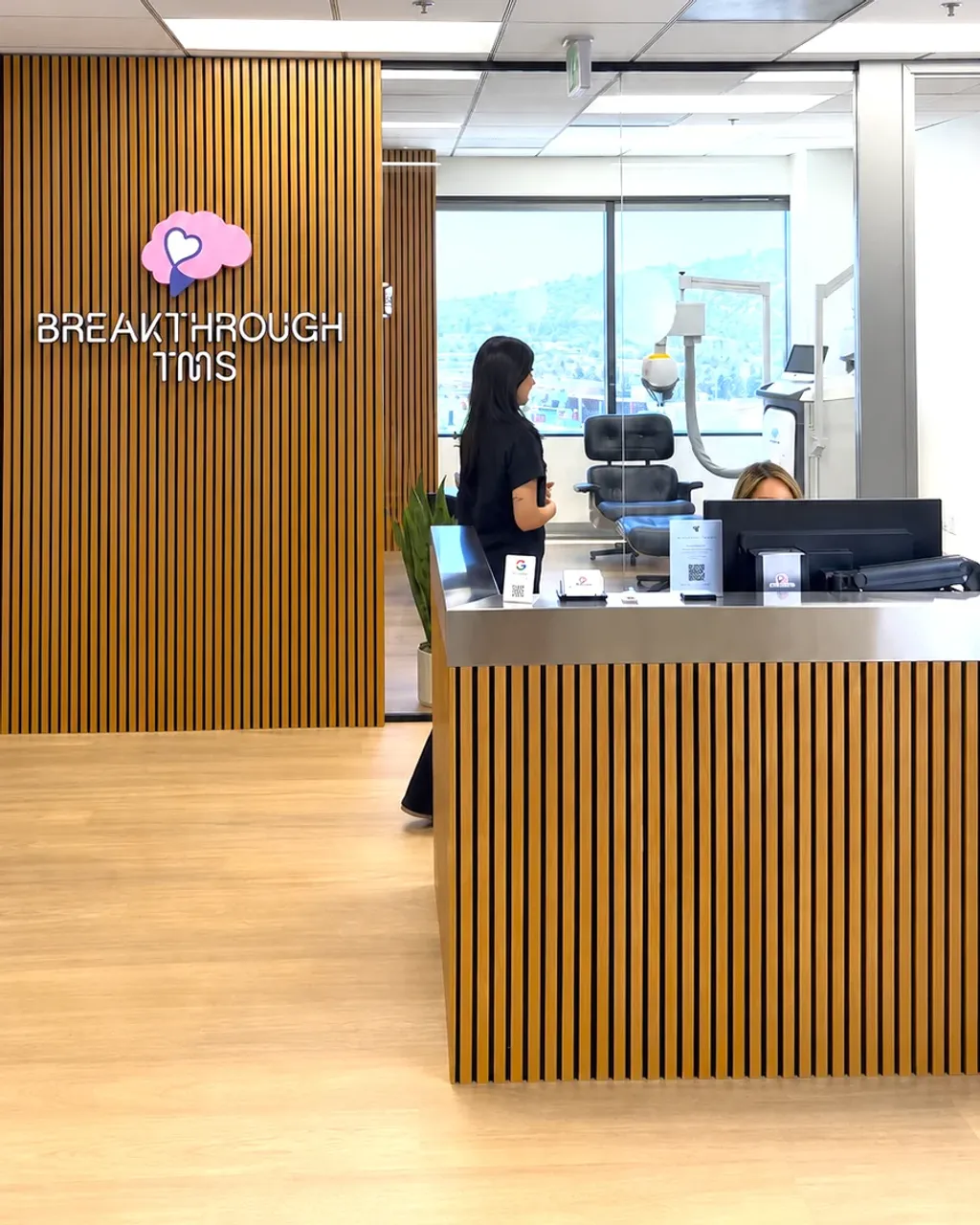
Conditions We Treat With Deep TMS
At Breakthrough TMS, we provide FDA-cleared care using BrainsWay Deep TMS. This noninvasive, in-office treatment uses magnetic fields to stimulate targeted brain networks associated with specific symptoms. Sessions are typically about 20 minutes or less, do not require anesthesia, and many patients return to normal activities afterward, including driving themselves home.
Powered by BrainsWay 104 System
Major Depressive Disorder (MDD)
For adults whose depression has not improved enough with medication or therapy.
Learn more about Major Depressive Disorder (MDD)Depression With Anxiety Symptoms
FDA-cleared to reduce anxiety symptoms that occur alongside depression in adults.
Learn more about Depression With Anxiety SymptomsLate-Life Depression
FDA-cleared for older adults with depression through age 86.
Learn more about Late-Life DepressionObsessive-Compulsive Disorder (OCD)
A specialized coil and protocol designed to target the brain circuits involved in OCD.
Learn more about Obsessive-Compulsive Disorder (OCD)Smoking Addiction
FDA-cleared as an aid for short-term smoking cessation in adults.
Learn more about Smoking AddictionMost of the people we treat are adults, see our overview of adult TMS therapy in Los Angeles, including TMS for anxious depression. Prefer a faster schedule? We also offer an FDA-cleared accelerated Deep TMS protocol that condenses the core depression course into six treatment days.
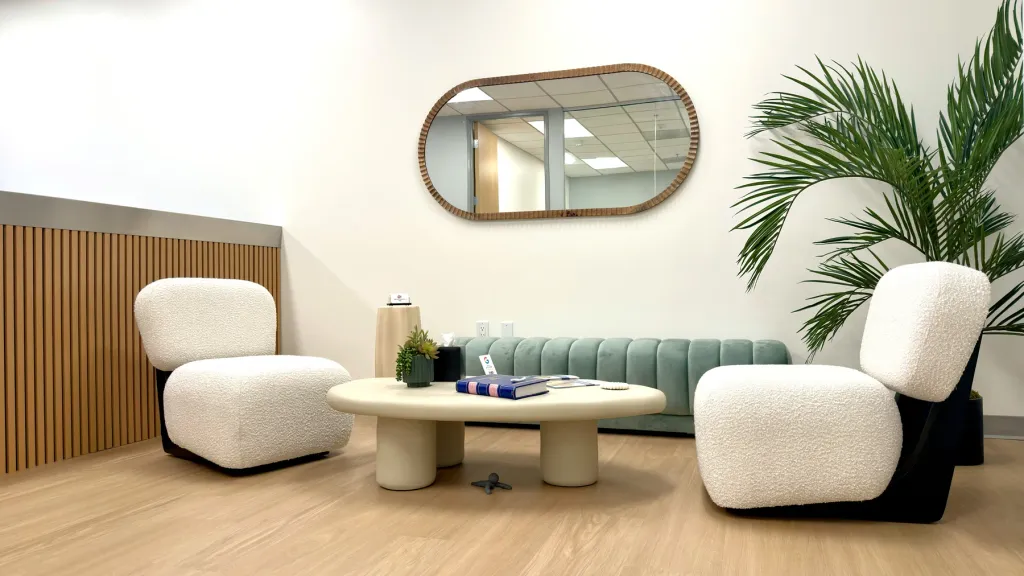
Why Choose Breakthrough TMS
We are a TMS-only clinic. That focus means a structured, consistent approach to care using FDA-cleared Deep TMS protocols, from your initial consultation through your full course of treatment, we prioritize clarity, consistency, and support, so you always know what to expect and what comes next. Patients visit us from Glendale and nearby communities, including Burbank, Pasadena, North Hollywood, and Sherman Oaks.
FDA-Cleared
We stay aligned to FDA-cleared indications and structured protocols.
Noninvasive
Treatment is delivered without anesthesia and is designed to fit into a normal weekly routine.
20 Min. or Less
Most sessions are about 20 minutes, making scheduling more manageable.
Depression Treatment in Glendale, CA
Most people arrive at Deep TMS having already tried something else first: a prescriber, a course of antidepressants, often therapy alongside it. That is the right order, and for many people it works. When it does not, the usual next move is another medication, then another, and each one costs weeks to find out.
Deep TMS is a different kind of next step. It is noninvasive and drug-free, and it works directly on the brain networks involved in mood rather than through the whole body. That matters for patients who cannot tolerate the systemic side effects medication often carries, because TMS does not carry them. It also suits patients who would simply rather not add another prescription. It is FDA-cleared for major depressive disorder, including depression that comes with anxiety symptoms and depression in older adults. Sessions run about twenty minutes, you drive yourself home, and nothing about the day afterward has to change.
We are a TMS-only clinic in downtown Glendale, and one thing is worth being clear about: we do not replace your psychiatrist or therapist. We treat alongside them and return you to their care when your course ends.
In pooled randomized trials of Deep TMS for treatment-resistant depression, 45.3% of patients responded and 38.3% reached remission, against 24.2% and 14.4% in the control groups. Start with Deep TMS for depression for how the treatment works, who it suits, and how it compares with trying another medication. If the 6 to 8 week schedule is the obstacle, our accelerated Deep TMS protocol, FDA-cleared for major depressive disorder, condenses the core course into six treatment days. Patients also travel to us from Burbank, Pasadena, and across the San Fernando Valley; see the areas we serve and how the drive in actually works.
Source: Lan XJ, Yang XH, Mo Y, et al. Deep transcranial magnetic stimulation for treatment-resistant depression: a systematic review and meta-analysis of randomized controlled studies. Asian J Psychiatr. 2024;96:104032. doi:10.1016/j.ajp.2024.104032









Deep TMS Therapy in Glendale, CA
Breakthrough TMS is a TMS-only clinic in the heart of Glendale, caring for patients from across the city and the wider San Fernando Valley.
Our Glendale Office
Breakthrough TMS
100 W Broadway #1050
Glendale, CA 91210
Monday to Friday, 7:00 AM to 7:00 PM
Areas We Serve in Glendale
We care for patients across Downtown Glendale, Adams Hill, Verdugo Woodlands, Glenoaks Canyon, Montrose, and the Brand Boulevard corridor, as well as neighboring Burbank, Pasadena, and communities throughout the San Fernando Valley.
Getting Here
Our office is in downtown Glendale near the Americana at Brand and the Brand Boulevard corridor, an easy reach from the SR-134, SR-2, and I-5 freeways. Please park in the parking lot. There are plenty of unreserved parking spots available. Parking will be validated. Get directions.
How to Get Started with Deep TMS in Glendale
Starting care is simple. Our team handles the parts that usually stall people: insurance benefits, prior authorization, and scheduling.
Call for a free consultation
Tell our care team what you are hoping to treat and ask anything. No referral needed, you can call us directly.
We check your insurance coverage
Send us your insurance card and we verify your benefits as a courtesy. We call back with a plain-language estimate of what your plan covers, and for self-pay we provide itemized quotes before you agree to anything. See the plans we work with and how benefits verification works.
Evaluation with our psychiatrist
Our psychiatrist, Artur Saakyan, MD, confirms your diagnosis, reviews your treatment history, and completes safety screening at our Glendale office.
Authorization, then your schedule
Most plans require prior authorization before TMS begins. Our staff submits the request, handles appeals, and schedules your sessions as soon as authorization is approved.
Want the full picture before you decide? See what happens during a TMS session, including mapping, session length, and scheduling.
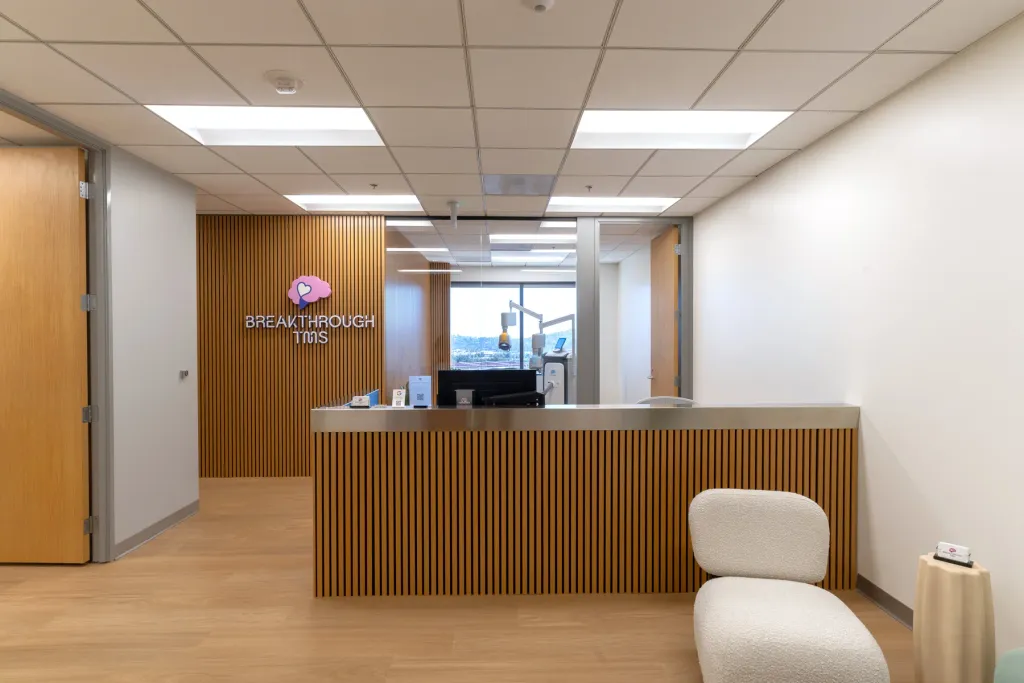
Frequently Asked Questions About TMS
How long is a session?
Most sessions are about 20 minutes or less, depending on the protocol.
Will I be awake? Do I need anesthesia or sedation?
You stay awake. Treatment does not require anesthesia or sedation.
Can I drive after treatment?
Many patients drive themselves to and from sessions and return to normal activities afterward.
What does treatment feel like?
Many people describe a tapping sensation during stimulation.
How long does a full course take?
Treatment length varies by condition and protocol. A full course runs about 8 weeks: sessions 5 days a week for 6 weeks, plus 2 weeks of taper sessions. Some treatments may take significantly less time.
Does OCD treatment include anything different?
Yes. OCD protocols include a brief provocation step prior to stimulation.
Does insurance cover TMS?
For depression, most major plans do, once their criteria are met. The usual requirement is a documented trial of at least two antidepressant medications without adequate relief. OCD coverage is less common and depends on the plan. We run the benefits check and the prior authorization for you before treatment starts, so you know exactly where you stand and there are no surprises. See our insurance page for the full process.
Ready to Take the Next Step?
Schedule a consultation at Breakthrough TMS in Glendale to review candidacy, timelines, and which FDA-cleared Deep TMS protocol best matches your symptoms and goals.
Schedule ConsultationSchedule Consultation